













From Shopping Centre to Urban Village
How residential development can unlock the value above our shopping centres
More than a decade ago, I wrote about the opportunity to unlock development potential above shopping centres where the shopping centre under develops the site.
The proposition was relatively simple: many Australian shopping centres occupied large, strategically located landholdings but were being considered primarily as retail investments rather than as mixed-use development opportunities.
The underlying principle remains relevant today. Shopping centres often combine substantial landholdings, established infrastructure, parking, transport accessibility and significant existing investment. Where planning controls permit additional density, the air space above and around an existing centre can represent a valuable development resource.
But experience has also demonstrated that successfully unlocking this potential involves considerably more than placing residential towers above an existing retail podium.
The first task is to understand the highest and best use of the entire landholding. This requires analysis of zoning, height and Floor Space Ratio (FSR) controls, existing retail floor space, unused development capacity, parking, access, infrastructure, residential demand and the ability to stage redevelopment while maintaining an operating shopping centre.
The fundamental question is whether the Land Value (without the benefit of partially retained or transitioned cash flows) for redevelopment will exceed the value of the existed shopping centre investment. If it does the highest and best use test will suggest the development is a viable option.
Our subsequent valuation experience demonstrates the scale such opportunities can achieve. Our expert valuation work has considered a major mixed-use development opportunity involving residential towers both above the shopping centre and elsewhere across the site. We considered a scheme comprising 2,544 apartments, illustrating why development capacity must be considered alongside the value of the existing retail investment.
Growing the trade catchment vertically
One of the most interesting benefits is the capacity to expand a shopping centre’s trade catchment vertically.
Traditionally, retail trade areas expand horizontally, capturing customers across progressively wider primary, secondary and tertiary catchments. Residential towers above a shopping centre create something fundamentally different: an additional customer population located within the centre itself.
Instead of travelling kilometres to reach the supermarket, restaurants, cafés, medical services, gymnasium or specialty stores, residents simply travel downstairs.
This creates a mutually symbiotic and supportive relationship. The shopping centre provides amenity and convenience that enhances the attractiveness of the apartments, while the apartments introduce a resident population directly into the retail catchment.
Accordingly, residential development should not be viewed merely as monetising surplus air rights. It can potentially strengthen the underlying retail proposition by increasing the population living immediately above and around the centre.
In effect, rather than continually expanding the catchment outwards, the owner can also expand it upwards.
Redevelopment without turning off the income
The second opportunity is equally important from a valuation cash flow and capital-markets perspective.
A sufficiently large shopping centre does not necessarily have to be demolished and replaced in a single stage redevelopment.
It may instead be capable of being divided conceptually into quadrants or development precincts, allowing the project to proceed progressively in stages to replace the retail shopping centre and development residential apartments.
Under this approach, perhaps one-quarter of the centre could initially be removed from trading and redeveloped. New retail accommodation would be constructed within a podium, with residential towers developed above it. Once completed and trading, the next quadrant could be redeveloped.
The strategy can then be repeated across the site. It involves careful planning and liaison between the design architect, cost planners and valuers generating cash flows for the transition from the existing shopping centre, to development in stages of a new centre and residential development.
Its significance is that for large enough sites, approximately three-quarters of the existing centre may potentially remain operational during an individual stage, subject of course to the centre’s configuration, access, servicing, construction methodology and tenant requirements.
Instead of extinguishing the centre’s entire income stream during redevelopment, the objective becomes to preserve as much existing net operating income as practicable while progressively replacing the old centre with new podium retail and developing residential towers above it.
This can fundamentally and significantly improve the project’s economics.
The feasibility becomes a rolling assessment of existing retail income, temporarily displaced income, construction expenditure, replacement retail income and progressively realised residential sales revenue.
Ultimately the income offsets some debt costs in the project and strengthens returns.
Our previous work and case studies highlight the importance of recognising development timing and staging within a discounted cash-flow approach rather than treating a large mixed-use development as a single static event.
Our work has also demonstrated another important consideration: existing shopping-centre infrastructure can itself have considerable economic value. The analysis considered residential towers above existing retail and specifically examined the contribution of existing parking as well as the potential diminution in retail value caused by redevelopment.
These experiences reinforce an important valuation principle.
The proper question is not simply: what are the apartments worth?
It is:
What additional value can residential development create after recognising construction costs, time, financing, displaced retail income, infrastructure, development risk and the value of the existing shopping centre?
The best projects can create a virtuous circle: residential development monetises underutilised development capacity; the shopping centre provides immediate amenity to residents; residents expand the retail catchment vertically; and staged redevelopment can preserve substantial existing cash flow while the asset is progressively transformed.
The opportunity I identified more than a decade ago has therefore evolved.
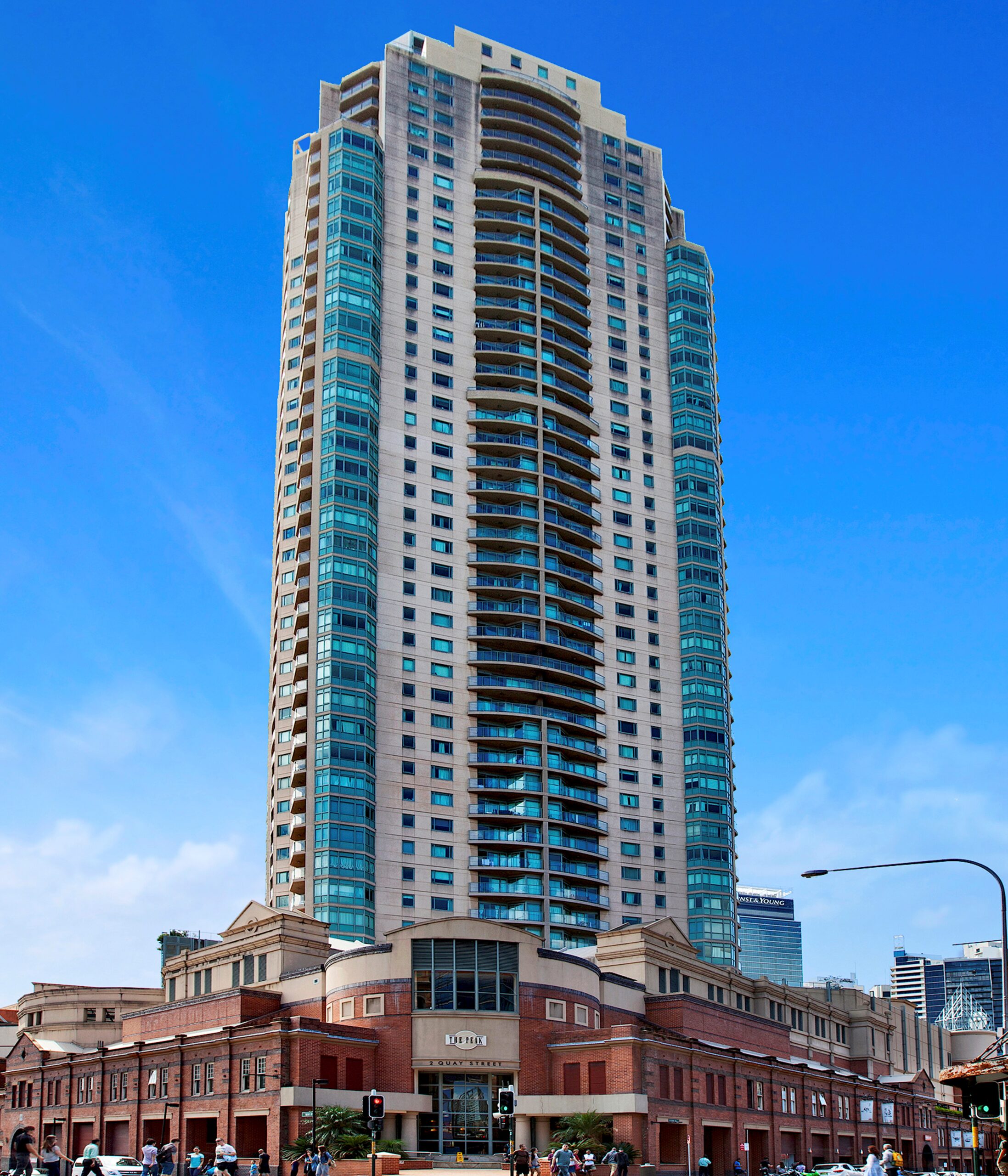
The shopping centre of the future should not necessarily be viewed as a retail building surrounded by car parking. It can become the podium of a vertically integrated urban village, progressively redeveloped while continuing to trade, with the population above helping support the shops below.
That is where the real opportunity lies.
By Gregory Preston AM, Managing Director, Investment Valuation & Capital Markets Advisory, Preston Rowe Paterson Sydney

Our Team of qualified valuers, researchers and advisers bring a wealth of knowledge and experience to the table
Gregory Preston AM
Investment Valuation and Capital Market Advisory
B.Comm., MAppFin, Ass. Dip. Val., LFAPI, FRICS, GAICD
Chair & Managing Director
Gregory Rowe
Real Estate, Asset, Plant & Machinery Valuation
B.Bus., FAPI, CPV, CPV P&M
Chair & Managing Director
Sunny Gao
Finance & Operations
B.Acc
Manager
Richard Lawrie
Investment Valuation & Capital Markets Advisory
BAppSc (Land Econ), FAPI, MRICS, CPV
Director
Dimity Lee
Investment Valuation and Capital Market Advisory
B.Prop. & Sus. Dev. (Val), AAPI, CPV
Associate Director
Daniel Saliba
Investment Valuation and Capital Market Advisory
B.Prop.Econ. (Hons), AAPI, CPV
Associate Director
Abby Doran
Marketing
B.Bus.Man.Mktg (Hons)
Executive Assistant to Greg Preston AM and Marketing Coordinator
Neil Watson
Investment Valuation and Capital Market Advisory
B.PropVal, GradCertAppFin, AAPI, CPV
Associate Director
Ramina Ravivaratharajah
Finance & Operations
BCom MFin Macq.
Finance & Operations Accountant
David Gould
Commercial & Residential Property Management Services
B.Bus & Comm.,Prop. AAPI, RPV
Commercial Property Manager
Joshua Naumoff
Investment Valuation and Capital Market Advisory
B.Bus & Comm.,Prop. AAPI, CPV
Associate Director
Anthony Antinora
Residential Property Valuations Services
B.Bus & Comm.,Prop. AAPI, CPV
Team Leader & Manager

Insights
19/02/26
Economic Snapshot January 2026

Insights
22/02/26
Transactions in Review January 2026

Insights
10/03/26
Economic Snapshot February 2026

Insights
15/03/26
Transactions in Review February 2026

Insights
21/04/26
Economic Snapshot March 2026
Insights
05/04/26
Transactions in Review March 2026

Insights
26/05/26
Economic Snapshot April 2026

Insights
05/06/26
Economic Snapshot May 2026

Insights
05/01/26
Economic Snapshot December 2025

Insights
09/12/25
Transactions in Review November 2025

Insights
06/12/25
Economic Snapshot November 2025

Insights
01/11/25
Transactions in Review October 2025

Insights
01/11/25
Economic Snapshot October 2025

Insights
01/10/25
Transactions in Review September 2025

Insights
01/10/25
Economic Snapshot September 2025

Insights
01/09/25
Transactions in Review August 2025

Insights
01/09/25
Economic Snapshot August 2025

Insights
05/08/25
Transactions in Review July 2025

Insights
01/08/25
Economic Snapshot July 2025

Insights
05/07/25
Transactions in Review June 2025

Insights
01/07/25
Economic Snapshot June 2025

Insights
29/06/25
Transactions in Review May 2025

Insights
01/06/25
Economic Snapshot May 2025

Insights
03/05/25
Economic Snapshot April 2025

Insights
10/05/25
Transactions in Review April 2025

Insights
23/04/25